Showing posts with label mindset. Show all posts

Monday, April 22, 2013

The Bug Out Bag Series Part 1- Theory

 Part I- Bug out Bag Theory

What Is a Bug Out Bag?


If you could grab one thing on your way out of the house, knowing you may not be able to come back for anything else, what would that be?
    Imagine that tonight you wake up to the fire alarm blaring, and the smell of smoke on the air. You have time to get you and your family out (because you practice this, right?), but what now? Hopefully you are lucky enough to have some sort of support network to fall back on until life gets back to normal, but leaving home with nothing but the clothes on your back (at least that, hopefully) will instantly put you in a “survival” situation. Think about a different scenario. What if its not a fire that forces you out of your home? It could be a chemical spill, a weather emergency, or civil unrest. Any of these things could force you out of your home… possibly forever. It would be a scary thing to face unprepared. Having a Bug Out Bag can help you in any of these situations. 
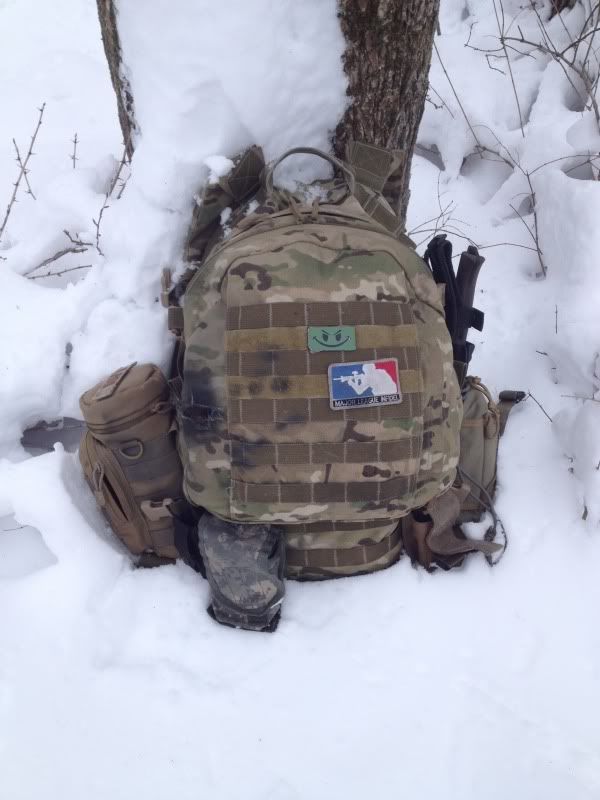
Military style 72 hour bag
Read on after the break, and we will talk a bit about what the Bug Out Bag is, and what it is not.

Saturday, January 12, 2013

Tactical Equipment and Preparedness

Equipment for a Soldier, or for the Self Reliant?
    If you spend any time on survivalist or preparedness forums on the internet or prepper themed YouTube channels, you may have seen a marked increased interest in tactical equipment. Tactical equipment, tactical shooting... the word "tactical" has been attached to just about everything out there. I can think of a few different reasons, such as video games, combat simulation sports, and maybe most importantly, America's longest period of modern warfare. There are a lot more people these days that have had an exposure to tactical equipment, and brought that interest home.

There is nothing inherently wrong with any of that. Tactical gear sells. Like anything else, sexy sells. In the preparedness world, it is no different. It is hard to sell your point with a video about canning equipment, or freeze dried food. It is much easier to sell the newest "sexy" tactical equipment, rifle, or flashlight.  Again, there is nothing really wrong with that, it just creates a lot of noise to cut through, especially for a new prepper.

The picture above contains a ballistic plate carrier, Kevlar helmet, and "war belt," along with a combat load out of magazines for the carbine and handgun. To many, it looks like equipment only a warfighter in a combat zone would need. To others, it looks like a part of their preparedness equipment. Where do you fall in that spectrum?

Let's try to cut through the hype, and get to an understanding of how tactical equipment fits in to the whole picture of preparedness.

Wednesday, December 12, 2012

Cover vs. Concealment


Cover vs. Concealment

The Difference can be your Life.

 
ESEE 4 for size comparison

Sometimes people use the terms cover and concealment interchangeably. Not only is that a mistake, but not knowing the difference could end up putting you in a world of hurt.

Cover- Stops incoming fire.
Concealment- Doesn't.

Concealment will hide you from whatever is or wants to throw bullets at you. Take the tree to the right as an example. It is not exactly a sapling, for sure. Trees and brush can hide you from an aggressor. You can use them to mask your movements, and hopefully avoid being shot at in the first place. However, if and when bullets do start to fly, you need to have actual COVER.


Exit Wounds
Cover is going to stop incoming rounds, up to a certain point. Obviously what stops a .22 may not stop 7.62 x 51. You always want to put as much solid mass between you and the rounds coming your way.

For Example-

The picture to the right is the same bunch of trees as above, from another angle. Those are exit holes from 5.56 rounds. We were firing 55 and 62 grain hardball, at 15-45 meters. The rounds had plenty of energy on the way out, hitting larger trees behind. If a person had been hiding behind that tree, or trying to use that tree as protection, they would have some bullets in them. (This is also a good reminder to be sure of your backstop when shooting at the range)

This is something you should keep in the back of your head next time you are out and about. Active shooters in civilian environments have started to become more frequent. If you were to find yourself in such a situation, what is in your environment that will protect you from enemy fire?

Your situational awareness is your first line of defense, even before whatever weapons you carry on your person. If you carry a pistol, (and you should, if possible) you need to keep yourself in one piece long enough to get that gun into the fight, and that may mean taking solid cover.

 If you are not directly being engaged, instead of fixing yourself to a piece of solid cover, you may want to get some concealment by putting objects, whether they be able to stop bullets or not,  between you and the shooter. Use those objects as a screen, and put distance between you and the shooter. 

Remember, cover and concealment are two entirely different things, but both can be used towards the same goal, and that is keeping you from sprouting any new holes. Next time you are out at the mall or movies, consider possible points of cover and concealment. Knowing the difference may save the lives of you and yours.

Kyle
121212


Tuesday, August 28, 2012

Dragoon's Rules of Survival #2- Always Have a Knife

    Rule #2 Always Have a Knife

    Not only should you have a knife, but it should be right for the job. The knife is probably one of your most important tools not only for every day life, but in an emergency situation. At Dragoon S/P Solutions, we carry a few different knives, and pack others for more specialized uses.

Why Carry a Knife? 

   Its easier really to ask why you wouldn't carry a knife every day. Almost every day I find a reason to pull out a pocket knife, at home or in the field. I can understand if you have a job where a knife is unauthorized. If that is the case, have one in your vehicle kit or get home bag. A knife is one of those things that hard to improvise in an emergency. Not impossible, but also not something you want to have to do before you are able to accomplish the task you needed the knife for in the first place.
  

What Knife Should You Carry?

    I'm not going to go deep into which knife brand, style, or steel type here. That is a different topic entirely. Pick a quality knife (not a gas station or flea market special) that you feel you can truly trust. I carry a folding knife on me every single day. I see a folding knife as much less threatening to the uninformed public than a fixed blade. Remember the concept of preparedness in layers. My folder should do everything I need from a knife until I get to my get home bag or bug out bag.
    In your GHB we suggest a decent fixed blade. Your GHB is built to take care of you in an emergency until
you get to your actual supplies. This knife should also be solid and dependable. You should also consider a multi-tool, unless you usually carry one on your person daily. In an urban environment, a multi-tool may be far more useful than a fixed blade knife.
    In the Bug Out Bag, most people will have at least one fixed blade knife. Some carry several, but I believe that to be overkill. I have two knives in my Bug Out Bag. Because any bug out plan I have takes me through and into rural areas, I have an ESEE Laser Strike. I also have an ESEE Junglas. The Junglas would be over-doing it for anyone that wasn't planning on doing serious wood processing.

  Make sure you carry enough knife for the job, something that is comfortable and more than anything else, something you can rely on. You never know when you will need a good piece of steel at your side.

Kyle
29AUG2012


Saturday, August 18, 2012

Dragoon's Rules of Survival #1 Part II

#1. Do Not Neglect the First Weapon.

Part II. Mental.

    The human mind is probably the one thing that brought us to the top of the food chain. Think about it for one second... Humans were not blessed with the tools of survival that the animal kingdom received. We have no claws for fighting or hunting.We don't have a thick hide or fur for protection from the elements. Our vision, hearing, and sense of smell isn't nearly as developed as most animals. The one advantage God saw fit to give us is our brain. No other species has the raw brainpower we do.
     The human mind is capable of amazing feats of true greatness. With it, we created civilizations, music, art, and infrastructure. The first time man was able to find a rock that made a spark, or saw that he could take a naturally occurring brushfire and make that fire work for him, we started to become the masters of our environment. We humans were able to take a world that that we were not built for, and mold it to our needs.
    The first part of Rule #1 was about your body being your primary weapon. I may have gotten a bit ahead of myself. Your mind controls your body, and that makes your brain your true primary weapon. One cannot function without the other though. If you prepare the body, but neglect the mind, you will fail. The same is true the other way around. Like everything in life, you have to strike a balance, and that balance will be a personal one.

 Like the old saying goes, knowledge is power. Your mindset will dictate your actions. How are you preparing your mind to help you prevail? If you aren't mentally prepared, but have a great bug out bag, nice AR, and six-pack abs, where does that leave you when your life as you know it collapses?

Square One.

    There is no replacement for a prepared mind. With a prepared mind you have a shot at surviving an emergency situation, no matter what happens to your gear. With all the right gear, you will fail if you don't have what it takes under that high speed kevlar helmet. Or tinfoil hat. Or whatever headgear you prefer.
 
    How do you work on your mindset?  Unfortunately, there is no short answer to that. Every person has to decide what they will do, and how they will make themselves mentally prepared. One thing I always did before a mission in Afghanistan was do mental reps. It was something they always preached in football, but I didn't really understand it then. Now I do. It works in the real world too. If you carry a weapon daily, mentally run through the process of trying to deescalate a situation so that you don't have to draw. Then run it differently, in a situation where you do have to. Wargame as many situations as you can think of. You will eventually run into a lot where there is no simple way to win. Be honest about your abilities in these mental reps. You should know what you are capable of from training.


   Skillsets are also part of mental preparedness. As a person who is interested about survival and preparedness, I have researched and practiced...
First aid, combat medicine, natural medicine, wild edibles, self defense (armed and unarmed), alternative energy, wilderness survival skills, emergency management, amateur radio, bushcraft, firecraft.... you get the idea. We live in an age where if you want to learn something, it is basically at your fingertips via the internet. If you think you may need a skill in an emergency situation, now is the time to learn it. There may not be time later. Don't count on just building a "survival library" either. Buying the Special Forces Medic Handbook is not going to help you treat that GSW in the field, and having an SAS survival manual will not mean you can live out in the woods the rest of your life. There may come a day where the only things you truly own are what you can carry, and trust me, the human mind can carry a lot. Make use of it.

Do not neglect the first weapon.

-Kyle
18AUG2012
Tuesday, August 14, 2012

Dragoons Rules of Survival #1

Rule Number 1- Do Not Neglect the Primary Weapon.

Kyle- This is part one of an ongoing series of the Dragoons Rules of Survival. Every person should develop their own set of rules that dictates their life. These are ours, and most are just as applicable in every day life as they are in an emergency or survival situation. Take 'em or leave 'em, apply what you like to your world, and develop your own Rules.


    In the survival and preparedness community, just like all others, sexy sells. Firearms, high speed bags, gear, even bandages and light weight food options. A lot of people focus on the nicest AR-15 with the newest gear they saw in a gun magazine. They stack ammo and mags deep for their rifle and pistol, make sure they are clean, well lubed, and combat or range ready at all times. All that is excellent! The rifle is what most people in the military call their "primary weapon." For the common person trying to prepare, I believe it is a different situation entirely. YOU are your primary weapon. There are basically two parts preparing you to be a fully functional, well rounded, primary weapon in the fight to survive. I will break down the first part after the jump.

Friday, August 10, 2012

Why We Prepare.


It is very easy to sound paranoid when talking about survival and preparedness. These days, most people do not feel the need to be prepared, especially if there is no immediate threat. That is evident in the amount of unprepared people who must rely on the government/aid organizations  when their coastal city is hit by a hurricane.

I consider prepping insurance for when insurance falls short. Many people buy into health, life, full coverage auto, and home owners insurance. But they don't think past that. In a serious natural disaster or economic crisis, even the most expensive insurance won't be worth the 1's and 0's they are written on. Your paper copies may be good for starting up a fire though.

I also understand that most people do not believe things can go that wrong. Those people probably do not believe they will get cancer either, but have health insurance.  Even if nothing in our lifetime goes so terribly wrong that you must rely on your emergency equipment and preparations, many of those things can be passed on to your children. Certainly the mindset you develop, and the values you instill on your kids will.

Don’t think that emergency preparations are only good for wide scale disaster, the end of the world as we know it type events. Ill go over some more of the smaller scale disasters and my personal threat assessment later, but even something like a relatively minor ice storm or power outage can be made much more bearable with some minor preps. Or, should you find yourself without a job due to injury or illness, your preps can be a buffer, providing for you when you cannot completely provide for yourself. In the end, it is you taking care of yourself down the road, like a retirement fund that at any time can keep you fed, warm, and relatively safe.

-Kyle